About the Rural Simulation Toolkit
Built in a rural emergency department. Made to be shared.
This toolkit grew out of an in-situ simulation program at Espanola Regional Hospital and Health Centre in Northern Ontario.
Our goal was straightforward: make simulation practical, accessible and useful in a small emergency department, without requiring a dedicated simulation centre, expensive equipment or a large teaching team.
What began as a local education initiative has become an opportunity to share our cases, resources and lessons learned with other rural healthcare teams.
01 / Our setting
Small hospital. Broad scope of practice.
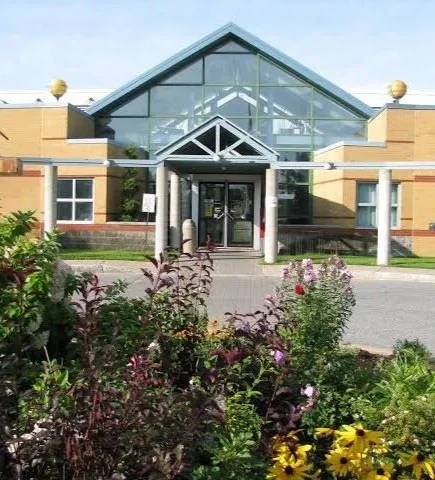
Espanola Regional Hospital and Health Centre (ERHHC) serves Espanola and surrounding communities in Northeastern Ontario, west of Sudbury and near the North Shore of Lake Huron and Manitoulin Island.
Our emergency department has 11 treatment spaces and approximately 14,000 patient visits annually. Emergency physician coverage is provided by a single physician at a time, using a combination of 12- and 24-hour shifts.
Like many rural hospitals, we care for a broad range of presentations with a small clinical team. Daytime emergency staffing typically includes two nurses, decreasing to one overnight. We provide initial resuscitation and stabilization locally, with access to regional specialty and tertiary services through Health Sciences North in Sudbury, approximately an hour away by road.
We didn’t start in a dedicated simulation centre. We run our cases in the emergency department, using our own equipment, a mannequin and two facilitators.
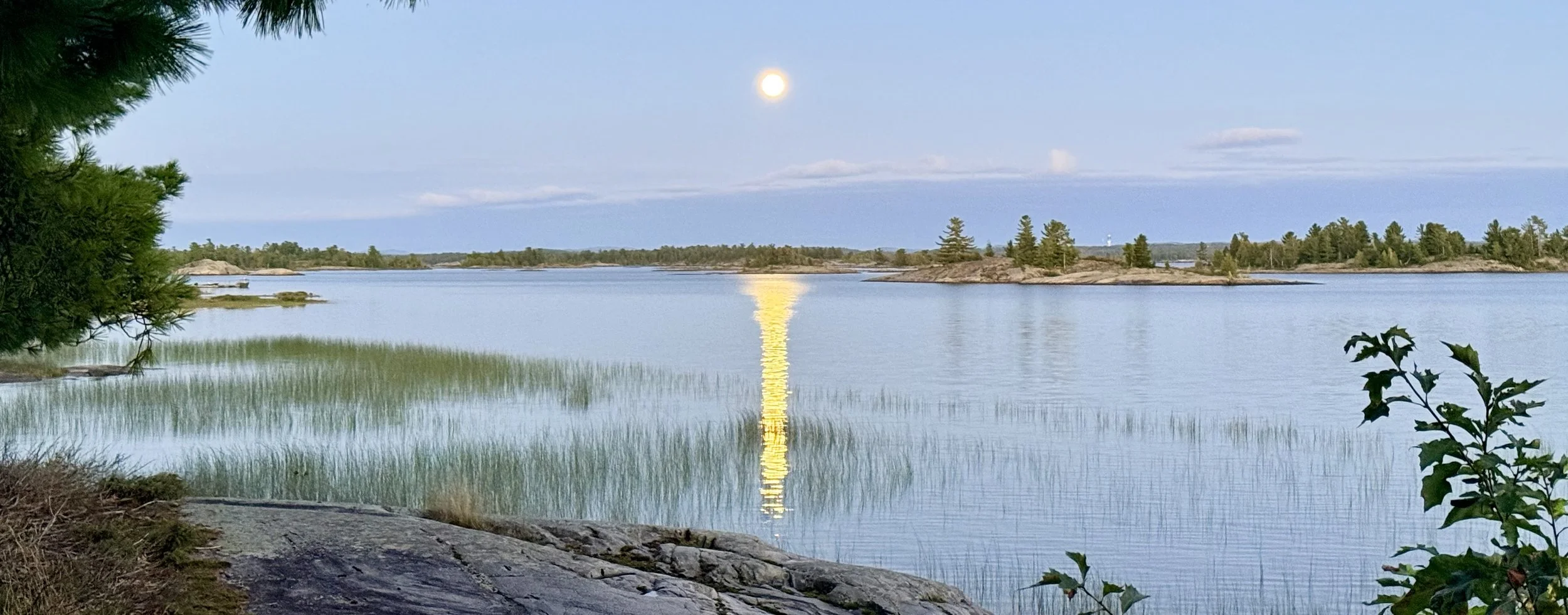
Bay of Islands, North Channel of Lake Huron
Clinical care always comes first.
Sessions are scheduled around departmental operations and can be postponed or cancelled when patient care requires it.
This environment is central to our approach. Simulation allows us to practise rare, high-stakes emergencies while discovering where our equipment, processes and teamwork could be improved before the next real patient arrives.
02 / Our team
Developed by clinicians, for clinicians.
Our program has grown through the contributions of physicians and nurses who share an interest in emergency medicine, education, teamwork and practical quality improvement.
Dr. Aidan Wharton
Emergency physician at Espanola Regional Hospital and Health Centre, and Health Sciences North. Regional Trauma Team Leader for Northeast Ontario. Chief of Staff and ED Medical Director at ERHHC. Associate Professor and Program Director of the FM-Emergency Medicine residency program at NOSM University.
Aidan helps lead the simulation program, with an interest in rural emergency systems, interprofessional education and using simulation to drive practical improvement.
Michelle Parker, RN
Clinical Manager of Emergency and Acute Care at Espanola Regional Hospital and Health Centre.
Michelle co-facilitates the in-situ simulation sessions, bringing nursing leadership, operational knowledge and an essential perspective on clinical workflows, equipment and team function.
Dr. Pascale King
Emergency physician practising at Health Sciences North and Espanola Regional Hospital and Health Centre, with fellowship training in simulation. Simulation Coordinator for NOSM University’s FM-Emergency Medicine residency program, and Clinical Lecturer at NOSM University.
Pascale has contributed extensively to the development and writing of the simulation cases, clinical resources and educational content that form the foundation of this toolkit.
Dr. Sebastian Diebel
Emergency physician based in Timmins, Ontario, who also works regularly at Espanola Regional Hospital and Manitoulin Health Centre.
Sebastian was a founding contributor to the simulation initiative and helped establish the program's early educational and research foundations, including our published evaluation of rural in-situ simulation.
Shared learning, practical improvement.
This toolkit represents a collaborative effort, supported by our colleagues at ERHHC and the wider simulation education community.
We hope these resources make it easier for other rural teams to get started, adapt the cases to their own departments, and share what they discover.