Set the stage before you start the case.
Simulation can make experienced clinicians feel surprisingly exposed.
Nobody wants to be tested in front of their colleagues. Nobody wants a mistake in a simulated case to become a story at the nursing station.
So before we run anything, we make the purpose explicit:
This is learning, not evaluation.
Say it out loud.
Don't assume everyone knows the room is psychologically safe because you know it is.
We tell people explicitly that this is a safe educational environment. We make mistakes here. We learn from them. What happens in the simulation stays within the group, and nobody's performance is being graded.
“Thank you for participating in simulation. Your participation helps our team continually strive toward improving care.
This is a safe education environment – here is where we make and celebrate mistakes. Mistakes allow us to learn.
While we encourage you to talk about your simulation experience with your colleagues, two components must remain confidential - the nature of the case details, and the experience and actions of your colleagues. This must remain a safe learning environment, free of judgement.
To be clear, no aspect of your performance is graded or will impact your employment. The fundamental understanding of simulation is that we are all talented and intelligent adult lifelong learners.”
It can feel a little corny to read. Read it anyway.
Explain the rules of the simulation.
Remove the guessing game.
Before starting, explain what the mannequin can and cannot do.
How do I get a blood pressure?
What happens if I give a medication?
Can I intubate it?
Where will investigations appear?
Do I actually inject something?
The challenge should be the clinical problem - not figuring out the rules of the simulation.
Capable people still feel vulnerable.
Simulation asks people to expose how they think.
That's uncomfortable - especially for experienced clinicians who may have trained long before simulation became routine.
We've watched that discomfort fade as people realize that nobody is trying to catch them out.
And then something interesting happens:
People engage.
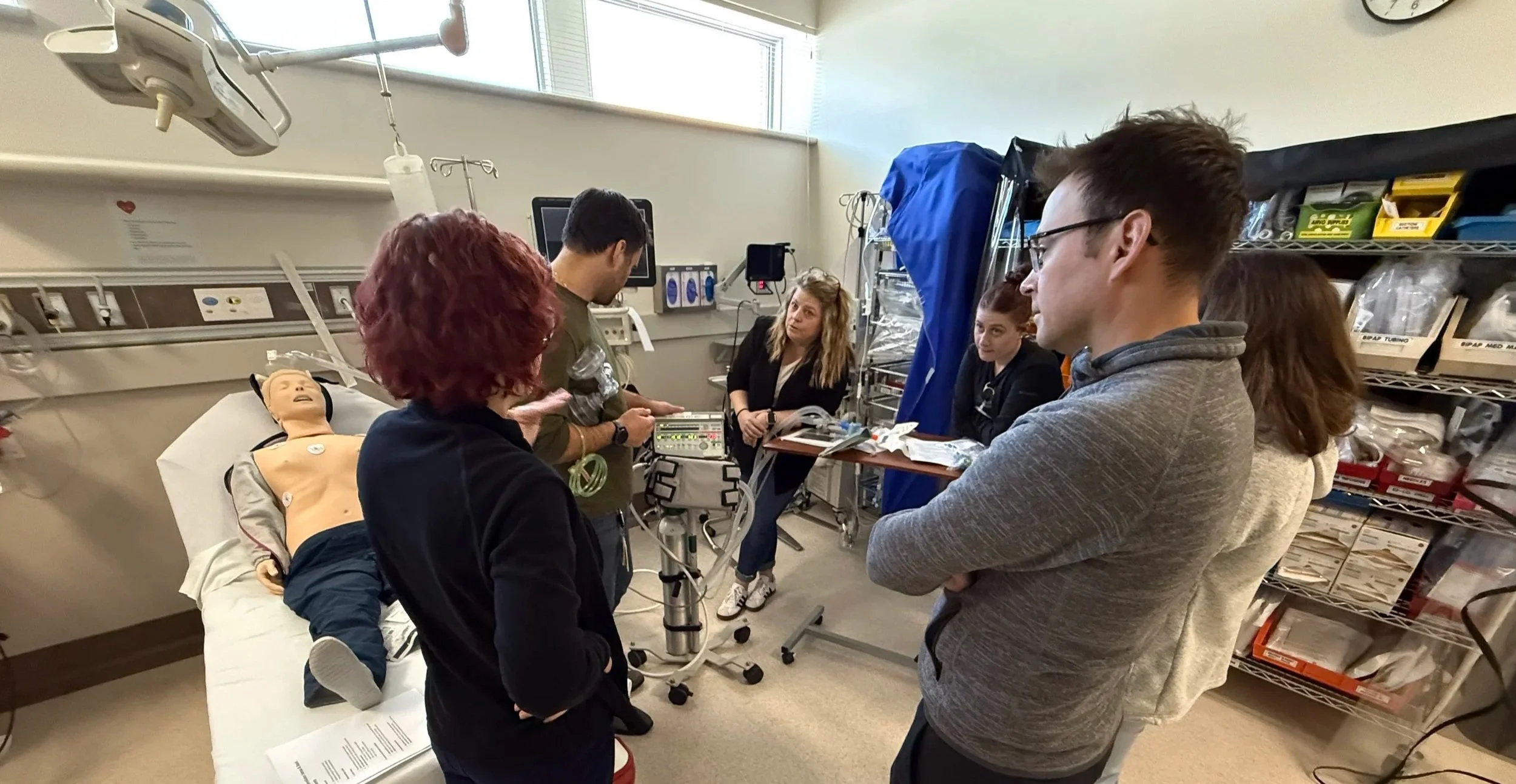
The debrief is a conversation.
You don't need to dissect every decision.
You don't need to have all the answers.
You need enough structure to make the conversation useful.
1 — Reactions
How did that feel?
2 — Clinical decisions
What were you thinking when…?
3 — Systems
What made that harder than it should have been?
4 — Takeaway
What's one thing you'll carry into practice?
Want to go deeper? → Debriefing and other resources
Then ask about the department.
What made good care harder?
Could you find the equipment? Did the workflow make sense? Would this work at 2 a.m.?
When people feel evaluated, they may hold back. When they feel safe, they're more willing to point out what isn't working.
That's useful information.
Simulation becomes more than clinical practice. It becomes a way for the people doing the work to improve the system they work in.
Make it safe enough to learn.
People will bring the expertise.
They'll bring the questions.
They'll notice the problems.
And, given the chance, they'll often help fix them.